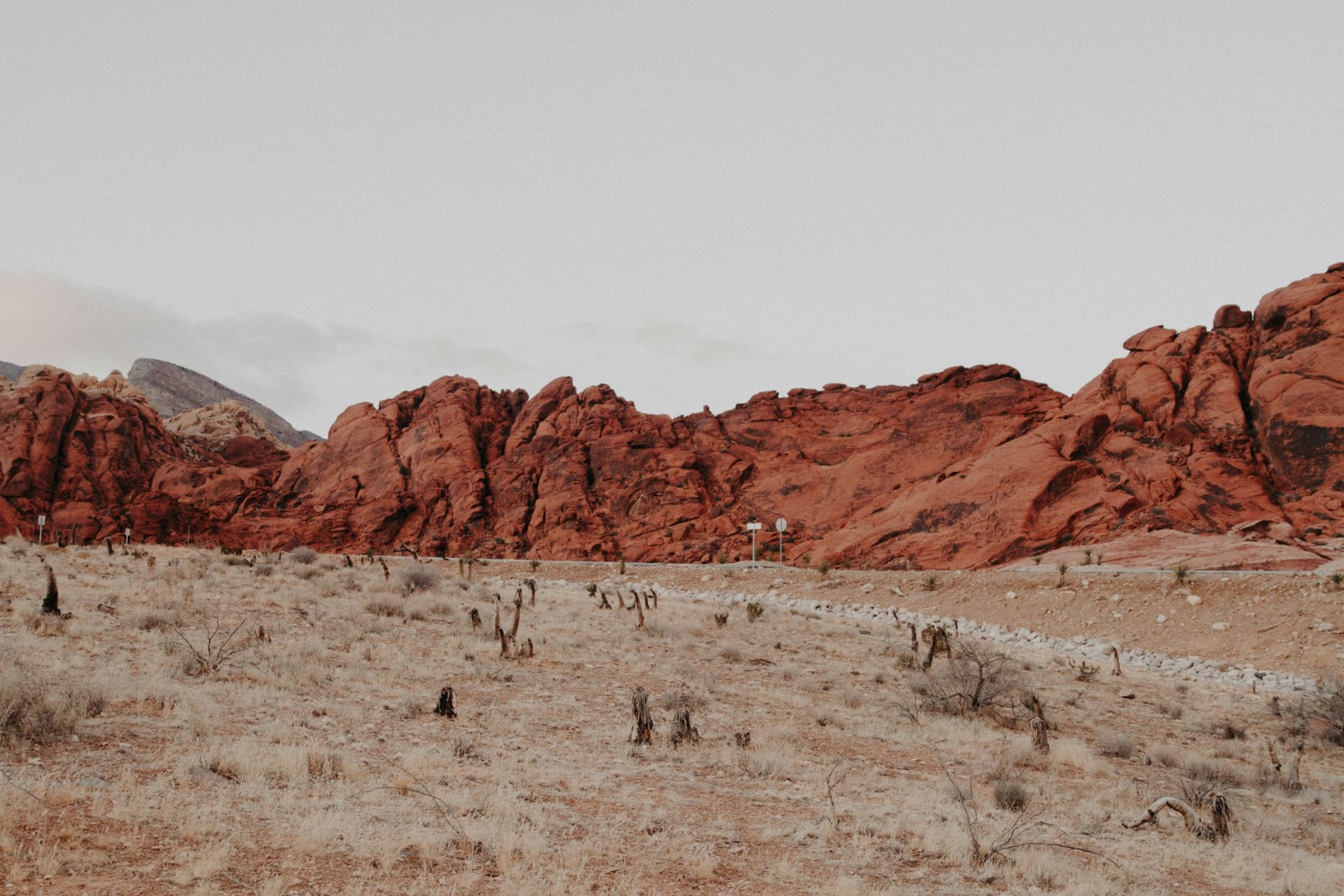
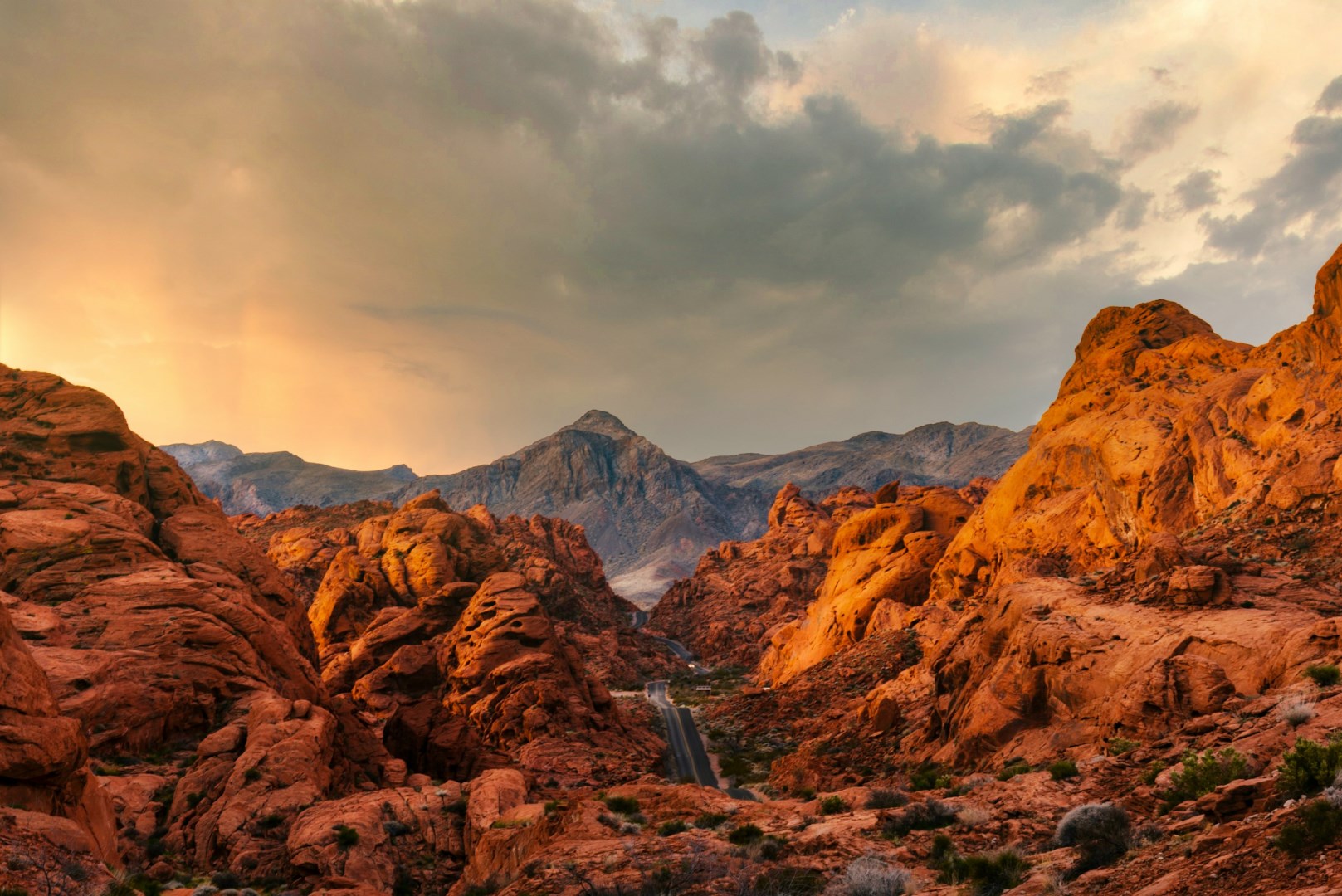
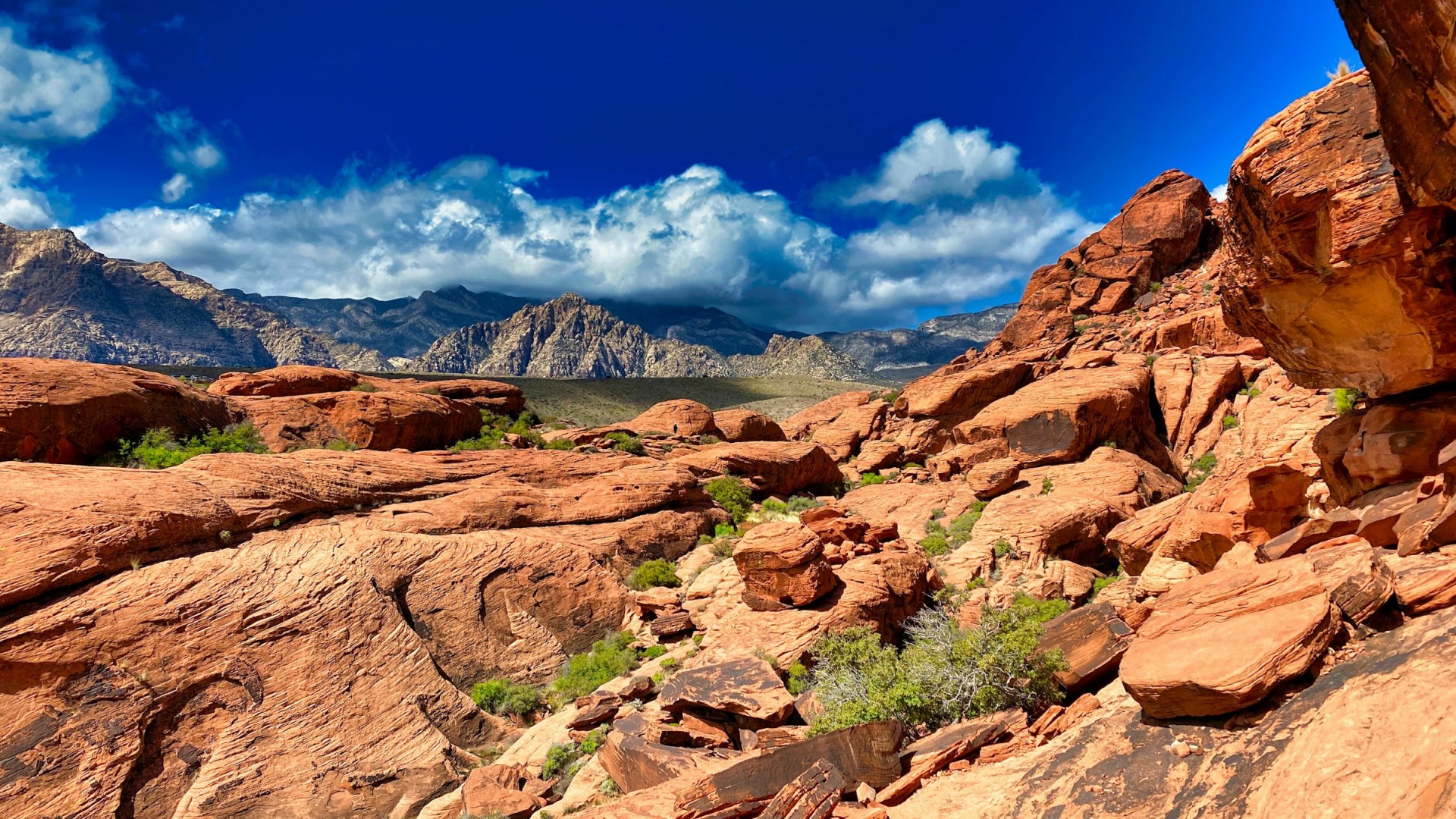
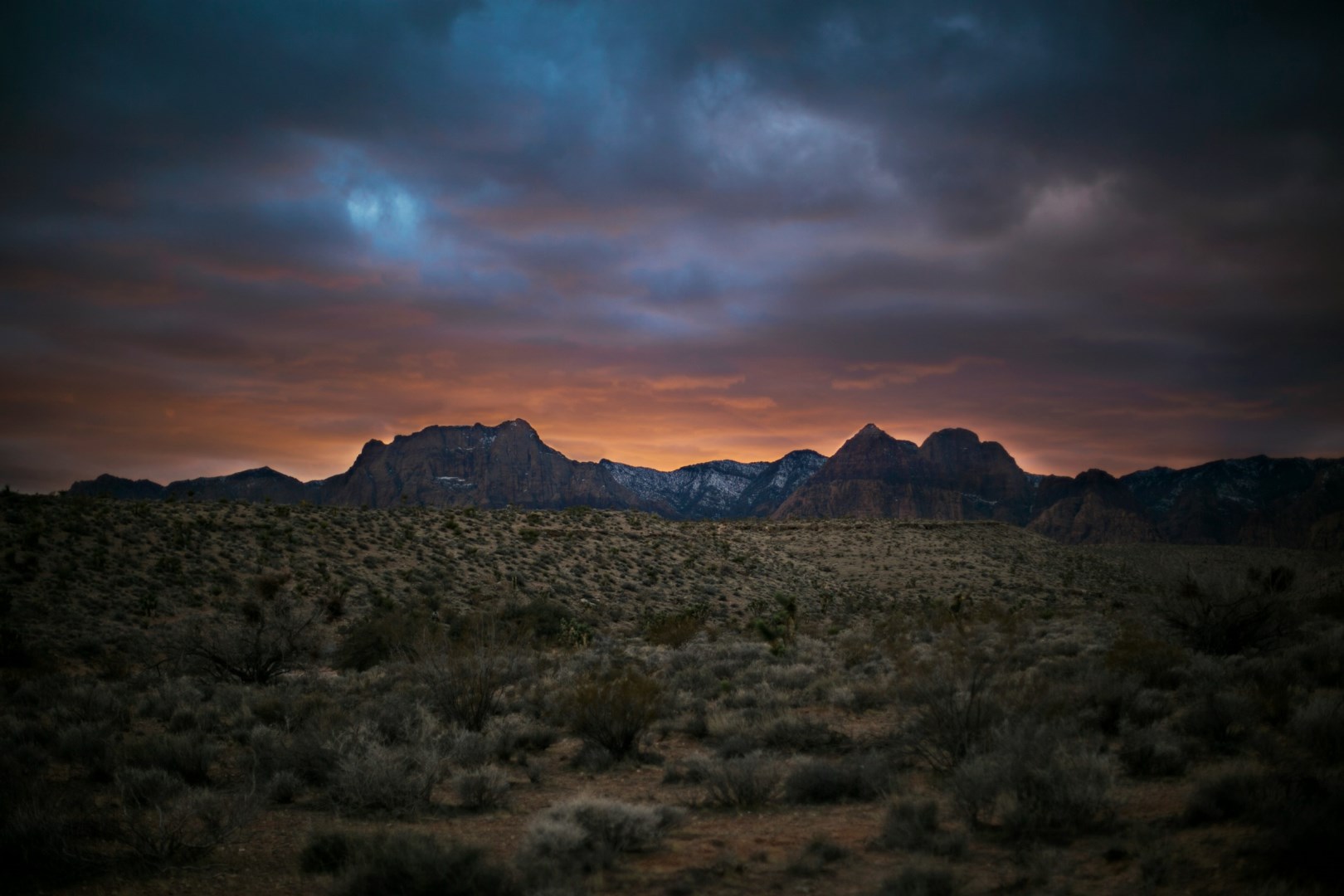
Red Rock Canyon National Conservation Area lies about 17 miles west of the Las Vegas Strip, where the Mojave Desert rises into sandstone cliffs, rugged mountains, and broad desert valleys. Nevada’s first National Conservation Area, it covers nearly 198,000 acres and provides a sharp contrast to the developed landscape of Las Vegas. The area is best known for its red and cream-colored rock formations, especially the Calico Hills and the Red Rock escarpment. Its high desert setting also supports diverse plant communities and wildlife, with springs and natural water catchments creating pockets of life within the dry landscape.
Red Rock Canyon has a long human history, with archaeological evidence showing that Indigenous peoples used the area’s water, plants, animals, and natural shelters. The Southern Paiute maintain continuing cultural connections with the region. More recent history includes ranching, mining, transportation routes, and sandstone quarrying, remnants of which can still be found within the conservation area. Visitors can see cultural resources such as rock art and archaeological sites along designated trails, including the Petroglyph Wall area. These places are protected and should not be touched, climbed, altered, or removed, preserving them for future generations.
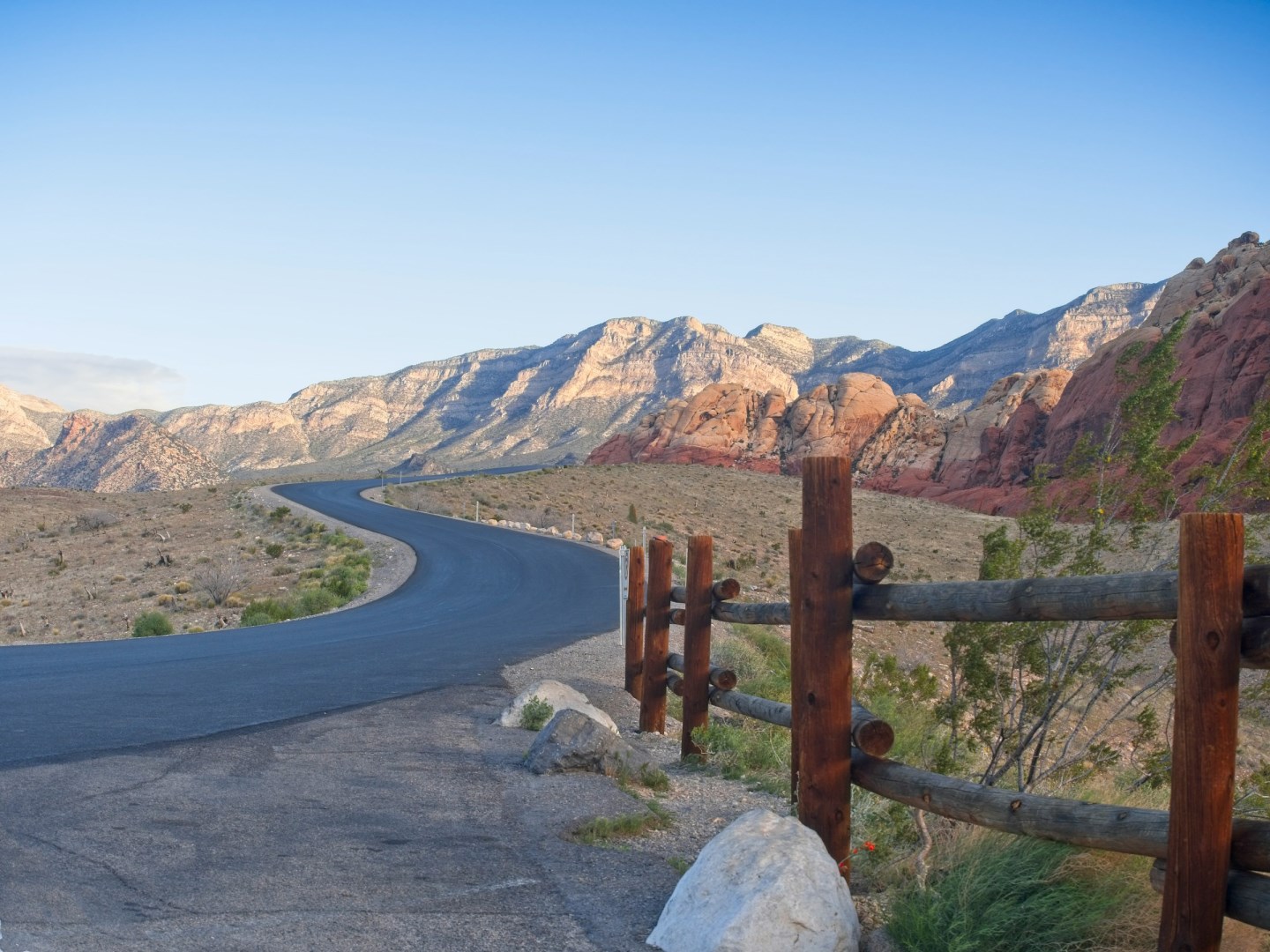
The 13-mile Scenic Drive provides access to many of Red Rock Canyon’s most notable landscapes, including Calico Hills, Sandstone Quarry, High Point Overlook, Ice Box Canyon, Pine Creek Canyon, and Red Spring. Hiking routes range from short walks to demanding mountain trails, while climbers use the area’s sandstone cliffs and walls. Turtlehead Peak provides a challenging route through the Calico Hills, and Keystone Thrust exposes an important geological fault. The landscape changes with elevation, creating habitats for desert tortoises, bighorn sheep, wild burros, birds, reptiles, and numerous desert plants.
Red Rock Canyon has no traditional town centre or local food culture because it is a protected desert landscape rather than a settled community. Visitors generally eat and purchase supplies in Las Vegas or nearby communities before entering the conservation area, although picnic facilities are available at selected locations. Red Spring is particularly notable for its year-round spring and accessible boardwalk through a desert meadow. The area’s geology is another distinctive feature: the Calico Hills are formed largely from Aztec Sandstone, whose red colour comes from iron-rich minerals. The conservation area also supports camping, cycling, horseback riding, and scenic touring.
Other Popular Destinations in Nevada